

Feeder Pillar Panel Components Explained: MCCB, Busbar, Enclosure

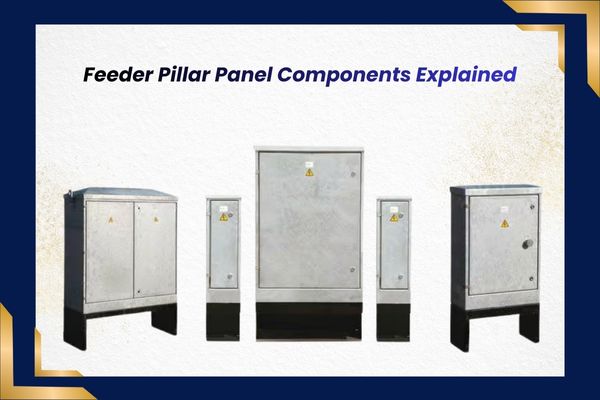
A Feeder Pillar Panel is often noticed only when power fails, yet it plays a constant role in keeping outdoor electrical systems running smoothly. From street lighting to large infrastructure projects, this panel quietly manages power flow while protecting connected equipment.
Many buyers search for feeder pillar panel details online but struggle to find explanations that are simple and practical. This guide explains feeder pillar panel components in a clear way, without heavy technical language, making it useful for engineers and non technical readers alike.
Why a Feeder Pillar Panel Is Used in Outdoor Power Systems
Outdoor electrical distribution faces challenges that indoor systems do not. Heat, dust, rain, and fluctuating load conditions all affect performance. An electrical feeder pillar panel acts as a controlled distribution point that handles these conditions safely.
Instead of running multiple cables directly from a transformer, power is routed through a feeder pillar panel. This improves safety, simplifies maintenance, and allows better control over outgoing circuits.
For cities, industrial zones, and commercial layouts, this approach brings order and reliability to power distribution.
Understanding Feeder Pillar Panel Components
Every outdoor feeder pillar panel is built using a set of essential components. Each part has a specific purpose, and together they form a dependable system.
The main components include the MCCB, the busbar system, the enclosure, and supporting accessories. Knowing how each one works helps buyers make better decisions during selection and installation.
MCCB Role Inside a Feeder Pillar Panel
The feeder pillar panel MCCB acts as the main protective device. MCCB stands for Moulded Case Circuit Breaker, and its job is to protect electrical circuits from overload and short circuit conditions.
When current exceeds safe limits, the MCCB disconnects the supply automatically. This protects cables, equipment, and connected loads from damage.
Unlike basic protective devices, MCCBs allow reset after fault clearance. This reduces downtime and makes them suitable for outdoor installations where quick restoration is needed.
Why MCCB Selection Matters
MCCB selection affects the safety and performance of the entire panel. If the rating is too low, unwanted tripping may occur. If the rating is too high, protection may be inadequate.
Factors that influence MCCB selection include load current, fault level, and the number of outgoing feeders. A reliable feeder pillar panel manufacturer helps match MCCB ratings with real site conditions.
| MCCB Application | Purpose |
| Incoming supply | Main isolation and fault protection |
| Outgoing feeders | Individual circuit protection |
Feeder Pillar Panel Busbar System Explained
The feeder pillar panel busbar system distributes power from the incoming supply to multiple outgoing circuits. Busbars are solid conductors that replace complex cable arrangements inside the panel.
By using busbars, power flows evenly and connection points remain organised. This improves reliability and simplifies future expansion.
Copper is widely used for busbars due to its conductivity and strength. Aluminium may be used in specific applications where weight or cost factors are considered.
How Busbars Improve Performance
A properly designed busbar system reduces heat generation and voltage drop. This is important in outdoor environments where temperature control already presents challenges.
Busbars are arranged to support phase, neutral, and earthing requirements. Each busbar type plays a role in maintaining electrical balance and safety.
| Busbar Type | Function |
| Phase busbar | Power distribution |
| Neutral busbar | Load balancing |
| Earth busbar | Fault current path |
Insulation sleeves and barriers are added to prevent accidental contact, making maintenance safer.
Enclosure Design for Outdoor Feeder Pillar Panels
The enclosure protects internal components from environmental damage. In an outdoor feeder pillar panel, enclosure quality directly affects service life.
Most enclosures are made from powder coated steel or galvanised metal. These materials provide strength and resistance against corrosion.
An enclosure with a suitable IP rating prevents dust and water ingress. This is especially important in Indian weather conditions where humidity and rainfall vary across regions.
Ventilation and Internal Space
Heat builds up inside panels during operation. Proper ventilation design allows heat to escape without letting moisture enter.
Adequate internal spacing also helps technicians carry out inspections and maintenance safely, without disturbing adjacent components.
Supporting Feeder Pillar Panel Accessories
Beyond major components, feeder pillar panel accessories support daily operation and safety. These parts may seem minor but play an important role in overall reliability.
Accessories may include cable glands, terminal blocks, indication lamps, selector switches, and space heaters. Each accessory supports either connection, monitoring, or environmental control.
Using good quality accessories reduces the risk of loose connections and internal faults over time.
Earthing and Electrical Safety Arrangement
Safety remains a priority in outdoor electrical installations. A proper earthing system provides a safe path for fault currents and protects people and equipment.
An earth busbar connects all earthing points inside the panel. The enclosure itself is also bonded to earth to prevent shock hazards.
A well-planned earthing arrangement supports stable operation and compliance with electrical standards.
Feeder Pillar Panel Installation Practices
Correct feeder pillar panel installation affects long-term performance. Even the best-designed panel may face issues if installation practices are poor.
The panel must be mounted on a firm foundation and positioned for easy access. Cable entry points should be sealed properly to avoid moisture entry.
Clearance around the panel allows safe operation and routine inspection. These simple practices reduce future maintenance problems.
Where Electrical Feeder Pillar Panels Are Used
Electrical feeder pillar panels support power distribution in many environments. Their design allows use across public, commercial, and industrial projects.
Common applications include street lighting systems, housing societies, commercial buildings, utility networks, and industrial layouts. Their modular design supports future expansion without major system changes.
Choosing the Right Feeder Pillar Panel Manufacturer
Selecting a dependable feeder pillar panel manufacturer helps avoid operational issues later. Buyers should focus on manufacturing standards, component quality, and after-sales support.
Dj Electro Controls designs panels with practical layouts, durable construction, and attention to real site conditions. This approach supports long-term performance in outdoor installations.
Maintenance for Long-Term Reliability
Routine checks keep feeder pillar panels operating safely. Visual inspection, cleaning, and tightening of connections help identify issues early.
Maintenance schedules may vary based on environment and usage, but regular attention extends panel life and improves safety.
Final thoughts
A feeder pillar panel may appear simple from the outside, yet its internal design plays a major role in safe power distribution. Understanding feeder pillar panel components such as MCCBs, busbar systems, and enclosures helps buyers select panels that perform reliably over time.
If you are planning an outdoor electrical project or upgrading existing infrastructure, connecting with Dj Electro Controls helps ensure the panel suits actual site demands rather than standard assumptions. A well-chosen feeder pillar panel supports safety, stability, and long-term operation.
Frequently Asked Questions
Q1. What is the main use of a feeder pillar panel?
Answer: A feeder pillar panel distributes power from a main supply to multiple outgoing circuits in outdoor installations.
Q2. Why MCCB is used in feeder pillar panels?
Answer: MCCBs protect circuits from overload and short circuit while allowing reset after fault clearance.
Q3. Are feeder pillar panels suitable for all outdoor conditions?
Answer: Yes, when built with proper enclosure rating and components, they suit a wide range of outdoor environments.
Q4. Which busbar material is preferred?
Answer: Copper busbars are commonly used due to better conductivity and mechanical strength.
Q5. How often should feeder pillar panels be checked?
Answer: Basic inspection every six months is advisable, with frequency adjusted based on site conditions.
Q6. Can feeder pillar panels be customised?
Answer: Yes, panels can be designed based on load requirement, number of feeders, and installation location.