

How Capacitor Panels Improve Power Factor & Save Costs

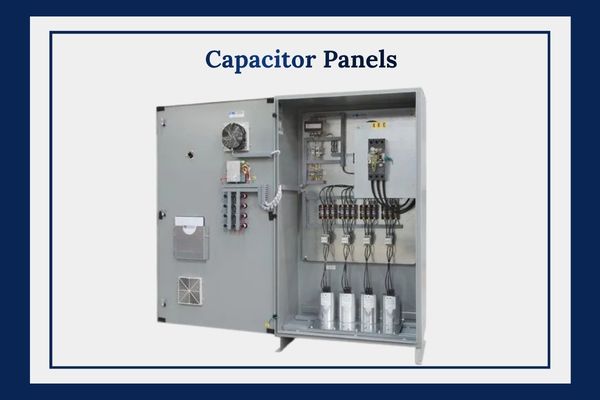
Rising electricity bills often push industries to look at consumption, but the real issue is not always how much power you use, it is how efficiently you use it. Capacitor panels play a direct role in improving this efficiency by correcting power factor and reducing unnecessary losses.
Many industrial units across India unknowingly pay extra charges due to poor power factor. These hidden costs add up over time and affect overall profitability. Once you understand how capacitor panels work, it becomes clear why they are a practical addition to any electrical system.
Understanding Power Factor in Simple Terms
Power factor reflects how effectively electrical power is converted into useful work. When machines operate, they do not just consume real power, they also draw reactive power.
Real power runs your equipment, while reactive power supports magnetic fields in devices like motors and transformers. When reactive power increases, the system becomes less efficient.
A lower power factor means your system draws more current than necessary. This leads to higher losses and increased electricity charges.
Why Low Power Factor Becomes Expensive
Low power factor problems and solutions are common in industries that rely on heavy machinery. When the power factor drops, the electrical system starts working harder than required.
Here is how it affects operations:
- Electricity suppliers charge penalties for poor power factor
- Cables and transformers carry extra current, leading to heating
- Voltage levels drop, affecting machine performance
- Overall system efficiency is reduced.
Over time, these issues do not just increase bills but also reduce the lifespan of electrical equipment.
What Are Capacitor Panels and How Do They Work
A capacitor panel for power factor improvement is designed to supply reactive power locally. Instead of drawing reactive power from the grid, capacitors provide it within the system.
This reduces the total current flow and improves the power factor.
To understand how capacitor bank reduces reactive power, imagine your system no longer depends on the power supply for reactive demand. The capacitor bank balances this requirement instantly, making the system more efficient.
Before and After Using Capacitor Panels
| Parameter | Without Capacitor Panels | With Capacitor Panels |
| Power Factor | Low (0.7 – 0.85) | High (0.95 – 0.99) |
| Electricity Charges | Higher due to penalties | Lower and controlled |
| System Efficiency | Reduced | Improved |
| Equipment Stress | High | Lower |
This simple shift leads to better energy usage and noticeable savings.
Types of Capacitor Panels Used in Industries
Different industries have different load patterns, which is why various types of capacitor panels are available.
Fixed Capacitor Panels
These are suitable where load remains constant. Capacitors stay connected all the time.
Automatic Capacitor Bank Panel
An automatic capacitor bank panel adjusts itself based on load changes. It switches capacitor steps on or off to maintain a stable power factor.
APFC Panels
These panels monitor power factor continuously and maintain it within a desired range without manual intervention.
Detuned Capacitor Panels
Used where harmonics are present. They protect capacitors and improve system stability.
Each type serves a specific purpose, and selection depends on the nature of the electrical load.
Power Factor Correction Formula Explained Clearly
The power factor correction formula helps determine how much correction is required.
Required kVAR = kW × (tan φ1 − tan φ2)
Here, φ1 represents the existing power factor angle and φ2 represents the target power factor.
This calculation helps engineers decide the correct size of the capacitor bank so that the system runs efficiently without overcompensation.
How Capacitor Panels Reduce Electricity Bills
Electricity bills for industries are not only based on units consumed. They also depend on demand, which is measured in kVA.
When power factor is low, kVA demand increases even if actual usage remains the same. This results in higher charges.
By installing capacitor panels:
- Power factor improves
- kVA demand reduces
- Penalties are avoided
- Overall billing becomes more efficient
This is why capacitor panels are often seen as a cost control solution rather than just an electrical component.
Real Impact on Industrial Operations
Once a capacitor panel is installed, the changes are noticeable in daily operations.
Machines run smoother because voltage levels remain stable. Transformers operate within safe limits. Cable heating reduces, which lowers the risk of insulation damage.
Over time, maintenance requirements also reduce because the system is not under constant stress.
When Should You Consider Installing a Capacitor Panel
Many industries delay installing capacitor panels because they are unaware of the warning signs.
You should consider it if:
- Your electricity bill shows power factor penalties
- The power factor consistently stays below 0.9
- Equipment heats up during operation
- You notice voltage fluctuations
Addressing these signs early helps avoid long-term losses.
Choosing the Right Panel for Your Requirement
Selecting the right panel depends on understanding your load behaviour.
| Factor | What It Affects |
| Load variation | Fixed or automatic panel selection |
| Harmonics presence | Need for detuned panels |
| System voltage | Capacitor rating |
| Future expansion | Panel capacity planning |
Working with experienced electrical panel manufacturers in India helps you get a properly designed solution.
Companies like Dj Electro Controls focus on accurate design, quality components, and reliable performance, which makes a difference in long-term usage.
Why Automatic Panels Are Becoming More Popular
Load conditions in most industries are not constant. Machines switch on and off, which causes fluctuations in power factor.
An automatic capacitor bank panel handles these variations smoothly. It maintains the desired power factor without manual adjustments.
This makes it suitable for industries with changing load patterns such as manufacturing units, processing plants, and commercial facilities.
Long-Term Advantages of Power Factor Improvement
Improving power factor is not just about reducing current bills. It also improves how your entire electrical system performs over time.
You get:
- Better utilisation of existing infrastructure
- Reduced load on transformers
- Lower risk of unexpected breakdowns
- Improved energy efficiency
These benefits continue for years once the right system is in place.
Still Paying High Electricity Bills? Here’s What You Might Be Missing
If your facility is still dealing with rising electricity bills and unexplained penalties, it may not be about usage alone. A well-designed capacitor panel can change how your system performs every single day. Connecting with a trusted manufacturer like Dj Electro Controls can help you understand exactly where your losses are coming from and how to correct them with the right solution.
FAQ
Q1. What is a capacitor panel used for?
Answer: A capacitor panel is used to improve power factor by supplying reactive power locally, which increases system efficiency.
Q2. How does a capacitor panel save electricity costs?
Answer: It reduces kVA demand and avoids penalties charged by electricity providers for low power factor.
Q3. What is the ideal power factor for industries in India?
Answer: Most utilities expect industries to maintain a power factor above 0.95.
Q4. What is the difference between fixed and automatic capacitor panels?
Answer: Fixed panels work for constant loads, while automatic panels adjust based on load changes.
Q5. Can capacitor panels be used in small industries?
Answer: Yes, even small industries benefit from improved efficiency and reduced electricity charges.
Q6. How do I select the right capacitor panel?
Answer: It depends on load type, variation, and system requirements. Proper analysis helps in correct selection.
Q7. How does a capacitor bank reduce reactive power in a system?
Answer: It supplies reactive power internally, reducing the need to draw it from the grid, which improves power factor.