
Why IEC 61439 Compliance Matters in Electrical Panel Design

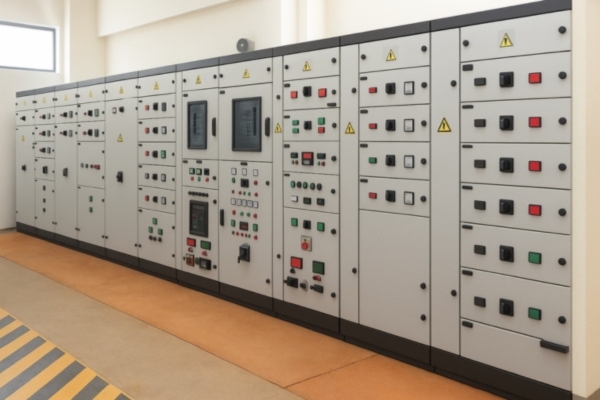
In electrical infrastructure, especially across commercial and industrial environments, safety, reliability, and performance are essential. That’s where IEC 61439 comes in a globally recognised standard that redefines how electrical panels should be designed, assembled, and tested. For businesses sourcing electrical panels from India, understanding this compliance can protect lives, assets, and investments.
Let’s understand why IEC 61439 compliance in electrical panel design is more than just a certificate; it’s a practical necessity.
Understanding IEC 61439 Compliance in Panel Design

IEC 61439 is a set of international guidelines issued by the International Electrotechnical Commission. It governs the construction and testing of low-voltage switchgear and control gear assemblies. The aim is simple: to ensure electrical panels perform safely and reliably under real-world conditions.
Unlike older standards, IEC 61439 clearly separates the responsibilities between the original manufacturer and the assembly manufacturer, improving accountability. It mandates thorough design verification, focusing on thermal performance, dielectric strength, and short-circuit withstand strength.
For engineers, contractors, and end users, this standard offers confidence. A panel labelled compliant with IEC 61439 is tested against well-defined performance metrics offering peace of mind and long-term operational efficiency.
Why IEC 61439 Replaced IEC 60439
Before the introduction of IEC 61439, most panels followed IEC 60439. However, with evolving safety expectations and growing industrial complexity, the limitations of the old standard became clear.
Key differences include:
- Design verification in IEC 61439 replaces the less flexible “type testing” of IEC 60439.
- Responsibility clarity is improved; now both panel designers and assemblers must document their role.
- Performance parameters are tested in real-life installation conditions—not just theoretical setups.
The move from IEC 60439 to IEC 61439 was a step towards higher consistency in panel manufacturing across global supply chains.
Key IEC 61439 Requirements for Panel Builders

If you’re a panel builder or working with one, meeting IEC 61439 isn’t just about passing a single test. It requires a structured, step-by-step approach to verification and documentation.
Common requirements include:
- Temperature-rise limits: Panels must operate safely under specified loads without overheating.
- Short-circuit withstand strength: Ensures safety during fault conditions.
- IP degree of protection: Prevents ingress of dust and water in specified environments.
- Dielectric strength: Panels must resist high voltages without breakdown.
- Protective circuit continuity: Verifies earthing and continuity of protective paths.
These checks are not just lab formalities. They impact real-world scenarios like electrical fires, equipment failure, and unplanned downtimes.
Panels that fail to meet these requirements could put lives at risk or result in costly maintenance.
Benefits of Using IEC 61439 Compliant Panels
Using IEC 61439 compliant panels benefits all stakeholders whether you’re an engineer designing systems, a procurement head sourcing panels, or an end-user relying on their performance.
Some of the practical advantages include:
- Improved safety for workers and equipment
- Lower maintenance frequency due to verified thermal and mechanical integrity
- Reduced fire hazards from poor electrical connections
- Simplified auditing and documentation during inspections
- Confidence in long-term performance, especially for mission-critical applications
It also opens doors to international markets, since most countries recognise IEC 61439 as the global benchmark for electrical panel safety.
IEC 61439 and LT Panels in India
LT (Low Tension) panels are a critical component in power distribution for industrial and commercial applications across India. These panels handle voltages up to 1000V and are commonly used in sectors such as manufacturing, real estate, and utilities.
Relevance in India:
- With rising demand for internationally certified panels, many Indian manufacturers, including DJ Electro Control, have shifted to full IEC 61439 compliance.
- Government tenders and export projects increasingly demand compliance as a pre-qualification requirement.
- Proper implementation of IEC 61439 ensures safer and more durable power systems, even in India’s challenging environmental conditions.
By adopting IEC 61439 for LT panels in India, manufacturers meet both domestic performance expectations and global buyer requirements.
Design Verification under IEC 61439
One of the standout features of IEC 61439 is its structured design verification methodology.
It includes:
- Verification by testing (conducting physical tests on the assembly)
- Verification by comparison (using previously tested similar designs)
- Verification by calculation (proving performance using standardised formulas)
Design verification is essential before a panel leaves the factory. It proves the panel can withstand real operational loads and fault conditions something that basic assembly checks or visual inspections cannot guarantee.
Commonly verified characteristics:
- Thermal performance
- Dielectric properties
- Mechanical endurance
- Earthing continuity
Manufacturers like DJ Electro Control integrate these verifications into their production cycle to deliver performance-assured panels.
Testing Procedures under IEC 61439
Before any panel is labelled compliant, it must undergo a series of stringent tests. These tests are not optional they form the backbone of the standard.
Some mandatory tests include:
- Dielectric strength test: Ensures insulation can handle high voltages.
- Temperature rise test: Checks if the panel remains within safe operating temperature limits.
- Short-circuit withstand test: Ensures the panel won’t fail under fault conditions.
- Degree of protection test: Confirms dust/water protection levels (IP ratings).
- Mechanical operation test: Validates that operating mechanisms are reliable over time.
These procedures are either done by third-party labs or in-house testing centres following IEC guidelines. Without passing these, a panel is not considered IEC 61439 compliant, no matter the claims made.
Why Global Buyers Expect IEC 61439 Panels from Indian Manufacturers
International companies increasingly source panels from Indian manufacturers due to competitive pricing and skilled engineering. But one thing they consistently expect is IEC 61439 compliance.
Here’s why:
- Panels must meet global insurance and safety norms.
- It reduces legal liability in case of an incident.
- Clients want full traceability, documentation, and test reports.
- A compliant panel is easier to maintain, modify, and upgrade globally.
Companies like DJ Electro Control offer tested, certified, and documented solutions that align with these expectations.
Common Mistakes Panel Builders Make with IEC 61439
Despite clear standards, many local builders still make errors while claiming compliance.
Common mistakes include:
- Skipping design verification due to cost or time pressure
- Using untested components that invalidate compliance
- Poor documentation that fails audits or export requirements
- Underestimating thermal performance, leading to hotspots
- Ignoring short-circuit tests, especially in LT applications
Even small oversights can compromise the safety and credibility of an entire electrical installation. Working with a manufacturer who understands the complete standard is essential.
Frequently Asked Questions
Q1: Is IEC 61439 mandatory in India?
Answer: IEC 61439 is not legally mandated for all panel applications in India but is highly recommended for safety and international acceptance. It is often specified in tenders and export contracts.
Q2: What’s the difference between IEC 61439 and 60439?
Answer: IEC 61439 includes updated methods like design verification and separates responsibilities between designers and assemblers, making it more detailed and safety-focused than IEC 60439.
Q3: Who is responsible for design verification under IEC 61439?
Answer: Both the original designer and the final assembler share responsibility. The assembler must ensure that any design changes still meet the verification parameters.
Q4: Do LT panels need to comply with IEC 61439?
Answer: If the LT panel is to be used in commercial, industrial, or export environments, IEC 61439 compliance is usually required or strongly recommended.
Q5: How do I know if a panel is truly IEC 61439 compliant?
Answer: Look for proper documentation, test reports, and certificates. Compliance isn’t just about labelling it must be backed by full design and routine verification records.
Q6: Can IEC 61439 panels be customised?
Answer: Yes. The standard allows for customisation as long as every modified panel is verified against the standard’s requirements before delivery.
Conclusion
Choosing IEC 61439 compliant panels isn’t just a technical decision it’s a practical one. With growing demands for safety, reliability, and global trade, compliance sets the foundation for operational success.
For businesses looking to source panels that meet these standards with dependable documentation, DJ Electro Control delivers proven solutions. Whether for LT panels or custom industrial systems, compliance with IEC 61439 ensures peace of mind and long-term value.
Ready to upgrade to compliant, tested panels? Connect with DJ Electro Control today.