

Power Panel vs Distribution Panel Board – What’s the Difference?

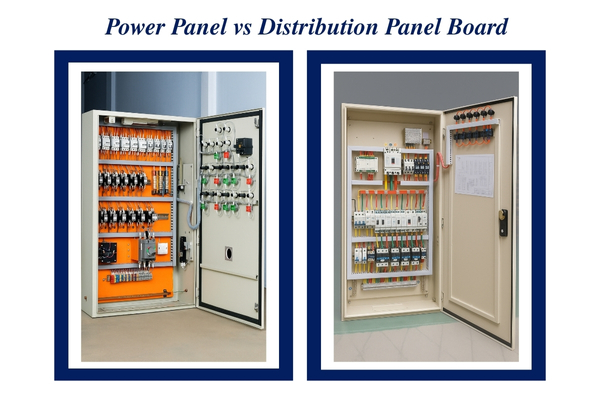
In any industrial, commercial, or large-scale residential project, electrical distribution is a critical part of infrastructure planning. One of the most common sources of confusion in this space is the distinction between a Power Panel Board and a Distribution Panel Board.
Though these two terms are often used together, they serve very different purposes in the electrical system. Choosing the right one can affect your project’s safety, operational efficiency, and long-term cost.
This detailed guide explains the differences, working methods, applications, and importance of both panels, helping you make informed decisions.
The Central Role of Power Panel Boards in Industrial Installations
In industries, commercial complexes, and manufacturing units, electrical supply often originates from a high-capacity source such as a transformer or generator. The power panel board becomes the first point of control after this source.
It is designed to handle high electrical loads, supplying power to large machinery, heavy equipment, or downstream sub-panels.
This panel acts as the backbone of industrial electrical systems, ensuring that large volumes of power are distributed safely and effectively.
Typical Functions of a Power Panel Board
- Primary Distribution Point: Receives electricity from main supply sources and distributes it to heavy machinery or other panels.
- Protection Against Overloads and Faults: Uses high-capacity circuit breakers to guard against electrical faults.
- System Monitoring: Often fitted with meters or monitoring systems for voltage, current, and load control.
- Facilitates Isolation for Maintenance: Allows sections of the power supply to be isolated safely during maintenance or upgrades.
Where You’ll Find Power Panel Boards
- Large industrial plants
- Commercial production units
- Data centres
- Multi-storey commercial complexes
- Heavy machinery workshops
A well-designed power panel reduces the risk of power failure, helps in load management, and supports the smooth running of energy-intensive operations.
Distribution Panel Boards – The Final Connection to Power Users
After power leaves the main power panel, it still needs to be safely divided and delivered to various smaller circuits within a building or facility.
This role is performed by the distribution panel board.
While a power panel handles bulk distribution, the distribution panel serves as the final stage of power control before reaching outlets, lights, small appliances, and office equipment.
Core Responsibilities of Distribution Panel Boards
- Secondary Power Distribution: Breaks down the power supply into manageable circuits for general use.
- Localised Circuit Protection: Provides protection for lighting, HVAC systems, office equipment, and other utility services through MCBs or MCCBs.
- Easier Maintenance and Control: Located closer to usage points, making it convenient for monitoring and isolating circuits.
- Safe Load Management: Ensures that individual circuits are not overloaded by controlling current distribution.
Where Distribution Panels Are Commonly Used
- Office buildings and complexes
- Retail stores and shopping centres
- Residential apartment buildings
- Hospitals, schools, and hotels
- Light manufacturing units and workshops
How Power Panels Differ from Distribution Panels
| Aspect | Power Panel Board | Distribution Panel Board |
| Function | Distributes large power loads directly from the source. | Divides power into smaller circuits for end-users |
| Load Capacity | High-load applications | Low- to medium-load applications |
| Location | Near power source (transformer, generator) | Closer to service areas |
| Circuits Controlled | Few, high-load circuits | Many low-load circuits |
| Protection Devices | High-capacity breakers | MCBs, MCCBs, RCBOs |
| Maintenance Needs | Requires industrial-grade inspections | Routine facility maintenance |
Why Choosing the Right Panel Matters More Than You Think
Selecting the wrong type of panel is more than a technical error — it can lead to serious operational risks and safety hazards.
Here’s what proper selection influences:
- Electrical Safety: The right panel protects against overloads, short circuits, and electrical fires.
- Cost-Efficiency: Prevents equipment damage and downtime, saving money in the long run.
- Compliance with Standards: Helps meet IS and IEC regulations for industrial and commercial installations.
- System Longevity: Ensures that both the panel and the connected systems have a longer service life.
- Scalability: Makes it easier to expand your system in the future without needing major changes.
For critical installations, it’s advisable to work with reputed manufacturers like DJ Electro Controls, known for providing reliable and customised panel solutions.
Practical Scenarios Where Both Panels Work Together
Let’s take a look at a common example in an industrial plant:
- Power Panel Board Installed in the Main Electrical Room: Supplies high-voltage power to heavy equipment, machinery, and major operational systems.
- Distribution Panel Boards Placed Across Different Departments: Deliver power to lighting systems, air conditioning, small machinery, office areas, and maintenance sections.
Both panels complement each other, working as part of a unified system that ensures operational efficiency and safety.
Essential Components You’ll Find in These Panels
Regardless of their different roles, certain components are commonly found in both panels, though their specifications may vary.
- Busbars: Metal strips that distribute electricity to different circuits.
- Circuit Breakers: Protect the system from overloads or short circuits.
- Isolators: Allow for manual disconnection of circuits.
- Relays: Monitor and respond to electrical conditions.
- Current Transformers: Measure current for monitoring and protection.
- Earth Leakage Devices: Provide protection against leakage currents.
Having a clear understanding of these components helps in making informed choices during panel selection and maintenance.
Frequently Asked Questions
Q1. Can one panel serve both power and distribution roles?
Answer: Yes, hybrid panels exist, especially in smaller setups. However, in large industrial installations, separating them improves safety and manageability.
Q2. Is a power panel suitable for residential use?
Answer: No. Residential applications generally require distribution panels, as the power demand is much lower.
Q3. How often should power and distribution panels be inspected?
Answer: At least once a year for distribution panels and twice a year or as per usage intensity for power panels. Regular inspections help prevent potential faults.
Q4. Do these panels comply with Indian standards?
Answer: Yes, all panels must comply with IS and IEC standards for quality, safety, and performance.
Q5. Can I customise panels for specific applications?
Answer: Definitely. Manufacturers like DJ Electro Controls offer tailored panel boards to meet project-specific requirements.
Q6. What happens if I use the wrong panel?
Answer: Incorrect usage may lead to system failures, increased risks of fire, equipment damage, or even regulatory penalties.
Why Industry Leaders Prefer DJ Electro Controls
When dealing with high-load power systems or sensitive distribution networks, quality matters.
DJ Electro Controls stands out for its commitment to manufacturing excellence, offering panels known for
- Robust design built to handle industrial demands
- Use of premium-grade materials
- Customisable solutions for various sectors
- Compliance with global safety standards
- Prompt after-sales support and technical guidance
Choosing DJ Electro Controls ensures peace of mind whether you’re installing a high-capacity power panel or setting up distribution boards across your premises.
Conclusion
In an interconnected electrical system, both power panel boards and distribution panel boards have distinct, equally important roles. While the power panel handles large-scale power distribution, ensuring that high-demand systems receive adequate supply, the distribution panel serves the practical function of bringing electricity safely to individual circuits and users.
Understanding the difference between a power panel and a distribution panel board not only helps in choosing the right equipment but also promotes system safety, efficiency, and reliability.
If you’re looking for dependable panels crafted to meet industrial, commercial, or institutional needs, DJ Electro Controls offers solutions trusted by industries across India and beyond.